skill · curated · open-source · terminal · ai-agent · Jul 30, 2026 · 2 min read
opencode: the open-source terminal agent that isn't locked to one AI model
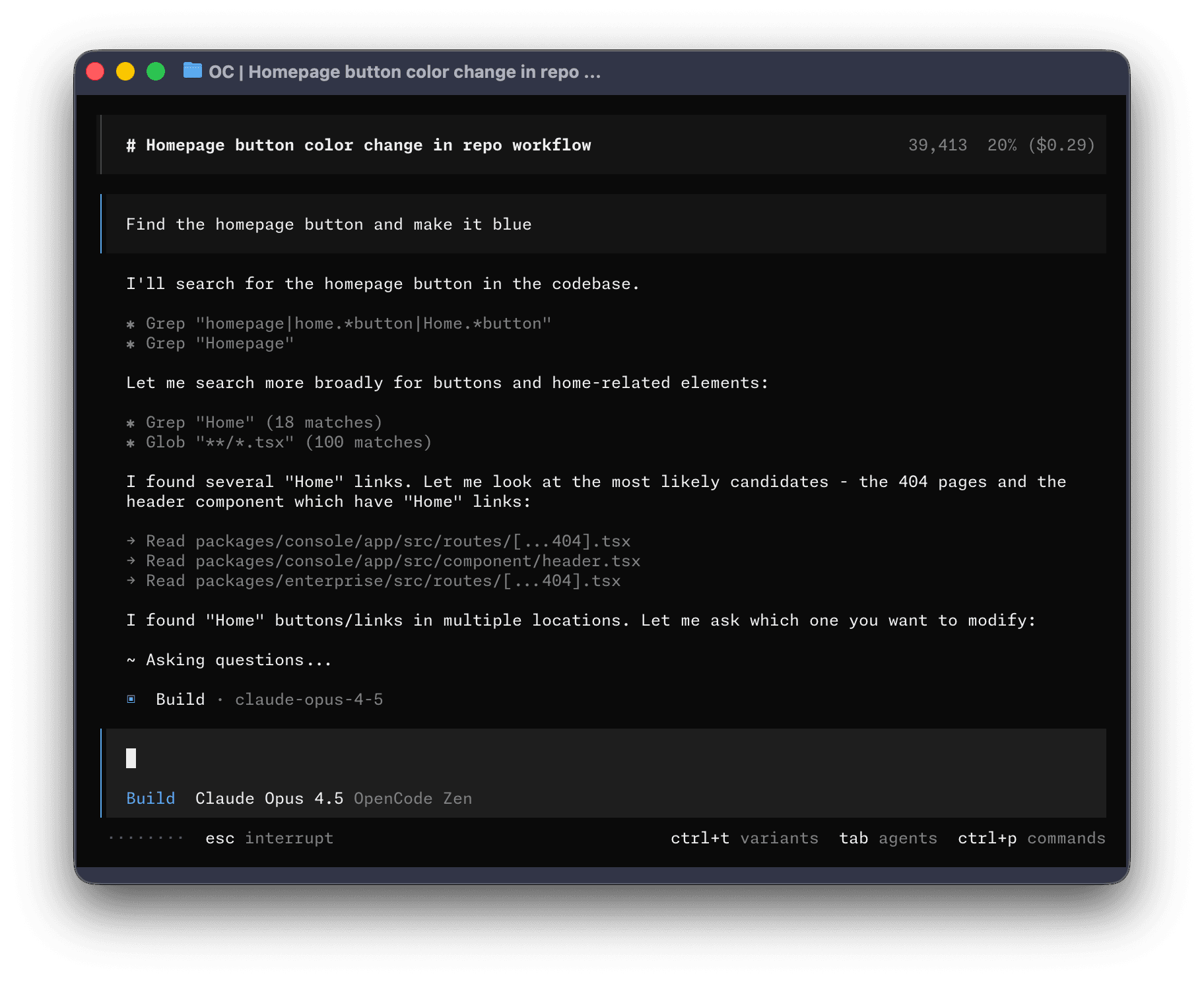
opencode is an open-source, MIT-licensed AI coding agent for the terminal—built by the team behind SST, the open-source AWS deployment framework. It does what Claude Code does: reads your files, writes code, runs shell commands, loops on tools until the task is done. The difference is it's not tied to a single model. You plug in Claude, GPT-4, Gemini, a local Ollama instance—or all of them at once, switching per task.
Where it genuinely shines
Two things set it apart from a typical wrapper agent. First, plan/build modes: the plan agent is read-only (no writes, no shell exec) so you can think out loud with the AI without worrying about runaway edits; switch to build when you're ready to execute. Second, LSP integration: opencode hooks into your project's Language Server Protocol, giving the AI the same type information, diagnostics, and reference-lookup that your IDE has. That's not just a nice-to-have—it means the AI actually understands your TypeScript interfaces instead of hallucinating them.
The multi-provider angle is genuinely useful if you're already paying for several AI subscriptions. Route cheap/fast tasks to Haiku or GPT-4o-mini, expensive planning to Opus or o3, and sensitive local-only stuff to Ollama—all through one consistent interface and one session history.
# Install via npm
npm i -g opencode-ai@latest

# Or Homebrew (macOS/Linux)
brew install anomalyco/tap/opencode

# Run in any project directory
opencode
The real caveat
3,700+ open issues as of mid-2026. That's not automatically a knock—fast-moving open-source projects accumulate bugs fast—but it's a signal. The desktop app is still beta, and the dev branch (where most active work happens) moves faster than the release channel. Rough edges include occasional session corruption, LSP integration that silently fails on some language servers, and provider-switching UX that still feels like a power-user feature rather than a polished one.
The flip side of multi-provider freedom is multi-provider overhead. You're now managing API keys, billing, and rate limits across potentially four or five separate dashboards. For solo freelancers who just want to ship client work, "use Claude Code and call it a day" remains a perfectly valid answer.
Worth following
If you want to own the full stack of your AI tooling—and you don't mind running dev-branch software—opencode is the most feature-complete open alternative to proprietary coding agents. The LSP integration alone is ahead of most competitors. Find it at github.com/sst/opencode, built and maintained by the SST team.