skill · curated · multi-agent · automation · Nov 9, 2026 · 2 min read
openrig: run a whole team of AI coding agents from one YAML file
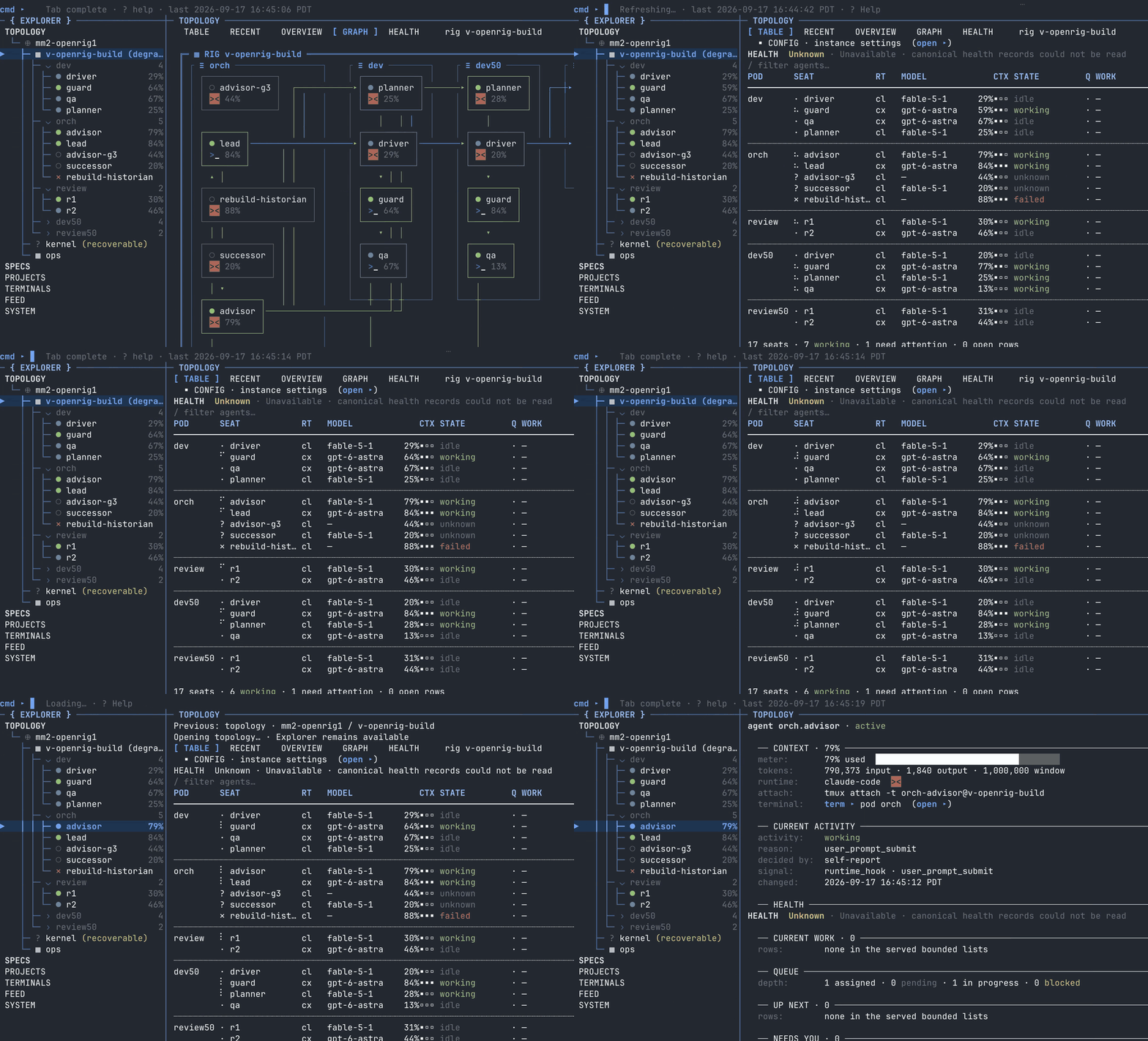
OpenRig (github.com/mvschwarz/openrig) is an open-source multi-agent harness — ~8.8k stars, Apache 2.0 — that lets you define a whole team of AI coding agents in a single YAML file (a "RigSpec"), then boot all of them with one command. Each agent gets its own tmux session. A TUI shows the topology, seat states, and live output. One team can mix Claude Code seats and Codex seats.
What it actually does
You write a RigSpec YAML that lists pods and seats: each seat is a named role ("builder", "reviewer", "qa") wired to a provider (Claude Code or Codex). rig up reads the file, starts the daemon, and spawns every agent. From there, rig send <seat> <message> talks to one agent, rig broadcast <message> reaches all of them, and rig chatroom opens a shared channel.
OpenRig ships several built-in teams so you don't have to define your own from scratch: starter (builder + reviewer), workshop (lead, builder, QA, reviewer), factory (seven agents), plus specialist presets like code-review, research, and pm. The snapshot/restore feature lets you pause a whole rig and resume it later.
When it earns its keep
The compelling case is parallelism that maps to how software actually gets reviewed. A builder writes the feature, a reviewer checks it, a QA agent runs tests — all running simultaneously, all in real tmux sessions you can attach to and steer. The fact that agents are actual visible terminal sessions (not hidden subprocesses) is a meaningful difference: you can intervene without killing the whole rig.
It also installs as a Claude Code skill, so you can spin up a team directly from a chat session:
# Install as a Claude Code skill (then type /rigs)
npx skills add https://github.com/mvschwarz/openrig/tree/v0.7.5/skills/rigs --skill rigs --agent claude-code

# Or install the full CLI
npm install -g @openrig/cli
rig setup --dry-run   # preview what it will change
rig setup
The real caveat
Setup is not lightweight. rig setup writes to your tmux config, your Claude Code and Codex settings files, and optionally installs Herdr (a dependency for some features). The README explicitly recommends backing up those files before running it — always do rig setup --dry-run first so you can see exactly what will change. If you're protective of your dotfiles, that footprint is worth thinking about before you proceed.
The RigSpec YAML format is at v0.7.x. The core idea is solid, but the schema has shifted before and may again — worth pinning your YAML to a specific release if you're building production workflows on it.
Credit
Built by mvschwarz. Full docs, RigSpec reference, and example team definitions: github.com/mvschwarz/openrig.